


Viking Line forms part of the transport infrastructure that is vital to security of supply. Our three regular routes enable passenger and freight transport across the Baltic Sea, provide employment for professionals across a wide range of sectors, and create economic value for numerous stakeholders.
Supply Security and Economic Value Creation
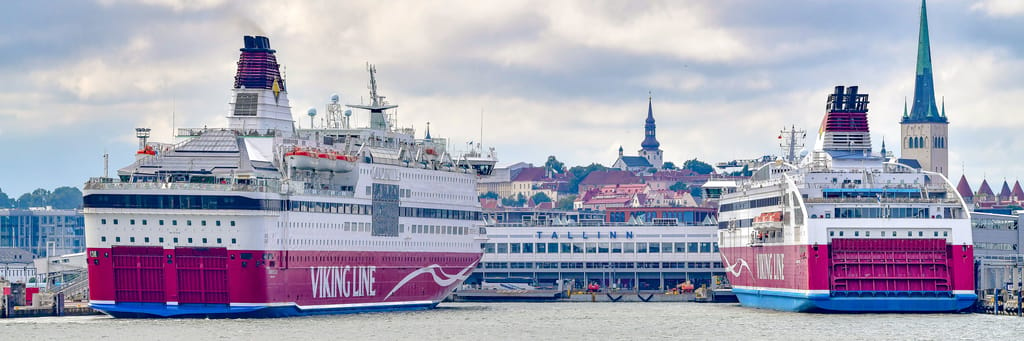
Maritime Transport as a Prerequisite for Trade
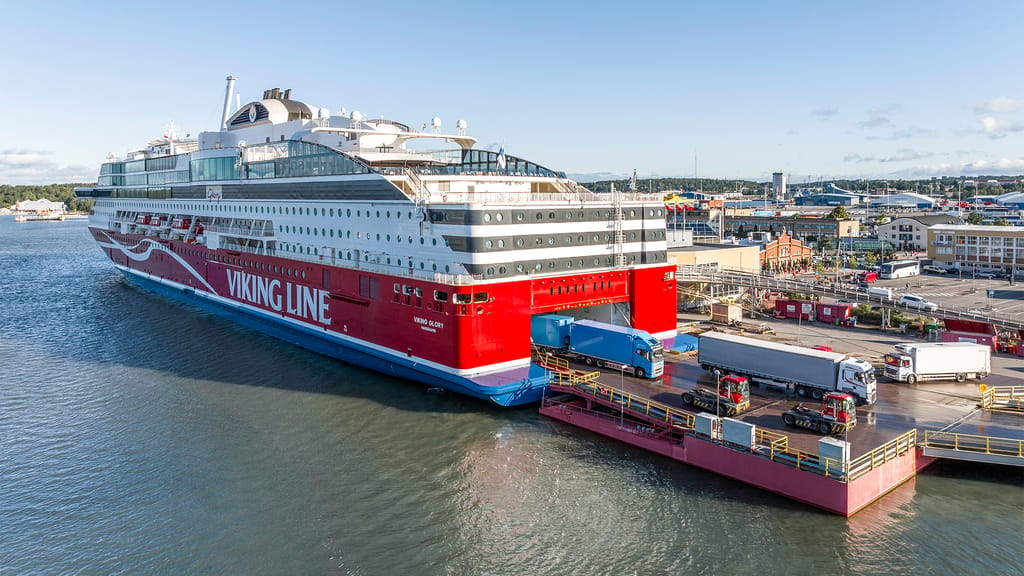
Our three regular routes between Finland, Sweden and Estonia are an important part of Europe's transport network. Maritime transport plays a crucial role in connecting the Nordic and Baltic regions with Central Europe and, through global transport links, with Asia. In 2025, freight volumes reached a record high of 139,484 freight units.
From a logistics perspective, Finland is effectively an island, with approximately 96 per cent of the country's exports and imports transported by sea. National security of supply depends heavily on maritime transport and requires reliable sea connections to ensure the smooth functioning of everyday society.
As part of the backbone of the logistics network, we safeguard maritime transport under all economic conditions. For this reason, it remains important that Finland continues to maintain its own merchant fleet in the future.
Shipping's Employment Impact
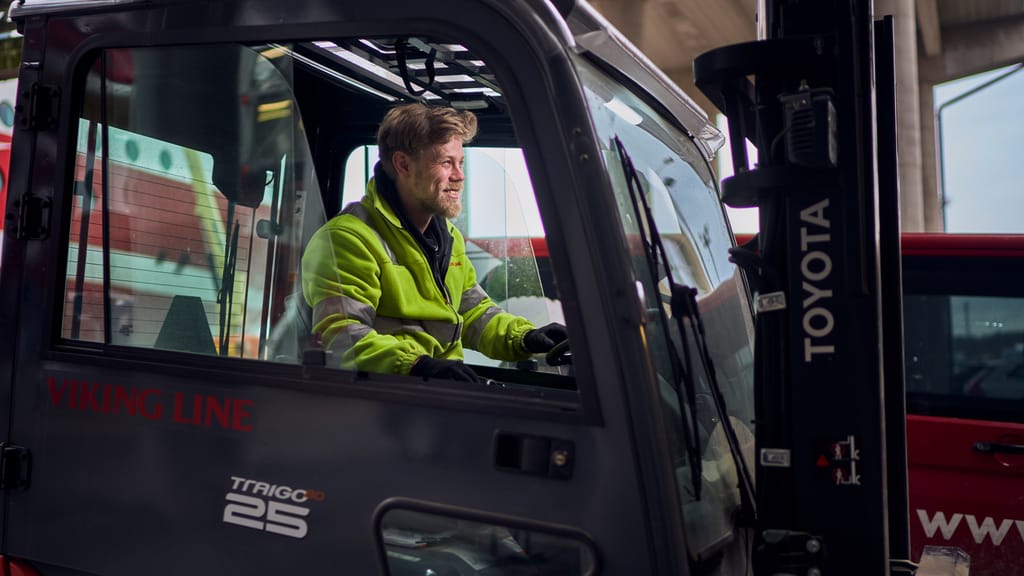
Shipping also makes a significant contribution to employment. In 2025, our average number of employees was 2,441. We employ more than 45 different professional groups across areas including vessel operations, maintenance, retail, catering, hospitality, entertainment, conference services, safety and healthcare. The majority of our crew members are Finnish. We are Finland's largest employer in the maritime sector, and our scheduled services are operated by vessels sailing under the Finnish flag.
Our onshore organisations are primarily located in connection with marketing units and terminals, while our seagoing personnel are geographically distributed across Finland, Åland, Sweden, Estonia and surrounding rural areas. Thanks to shift work and extended periods of leave, employees have the opportunity to live outside major growth centres, where alternative employment opportunities may be more limited.
Economic Value for Stakeholders
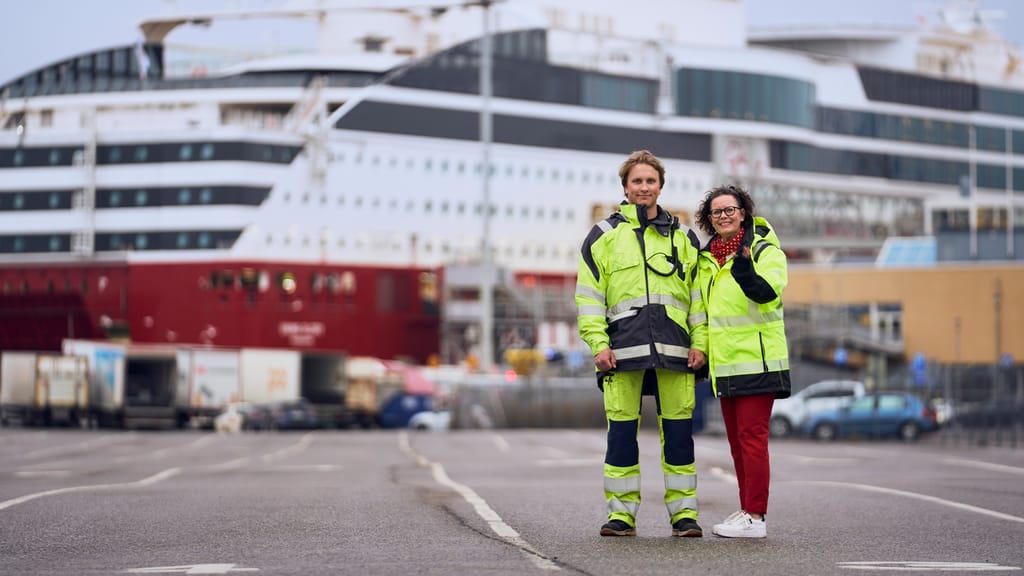
Viking Line's operations generate economic value for the Group's stakeholders in the markets where we operate. The largest financial flows consist of revenue, purchases from suppliers of goods and services, employee remuneration, payments to and from the public sector, dividends paid to shareholders, and financing costs paid to lenders.
In 2025, the Group's revenue and other income totalled €483.2 million:
- Purchases from suppliers amounted to €283.9 million, while investments totalled €19.8 million, of which €11.9 million related primarily to vessels and €7.7 million to tangible and intangible assets.
- A total of €123.7 million was paid to employees in net wages and pension contributions.
- A total of €46.0 million was paid to the public sector in port charges and vessel fees, emissions allowances, payroll taxes, social security contributions and income taxes.
- During the financial year, a total of €17.3 million was distributed to shareholders as dividends.