


As a shipping company on the Åland Islands, the sea is our livelihood and promoting its well-being is important to us. We want to be the forerunner in utilising new solutions that reduce our environmental impact.
The sea and the archipelago nature are close to our heart

Support the increased use of renewable biogas
We are working systematically to reduce emissions, and energy plays a key role in achieving our sustainability goals. At present, the vessels operating on the Turku route, Viking Glory and Viking Grace, run on a hybrid combination of renewable biogas and liquefied natural gas (LNG). We also utilise food waste and used cooking oil collected from our vessels in the production of biofuel.
When booking your voyage via our website or app, you can choose to support the increased use of renewable biogas. By making this choice, your contribution will be used to purchase renewable biogas for Viking Line’s own maritime operations on the Turku route.
The more passengers choose to support the use of biogas, the more renewable biogas we can use in our maritime operations in addition to our own biogas purchases.
The role of biogas in the energy transition
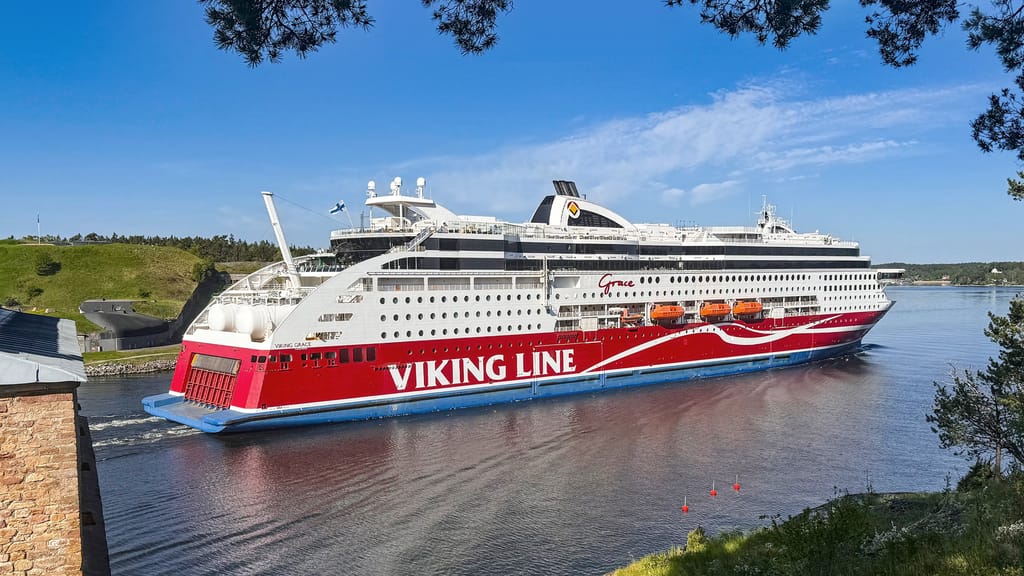
The most important factors in reducing emissions from maritime transport are improved energy efficiency and the choice of fuel. Over the past decade, Viking Line has invested nearly €9 million in technologies that optimise vessel operations across its entire fleet of five ships.
At the same time, our newest vessels, Viking Glory and Viking Grace, operate on a combination of renewable biogas and liquefied natural gas (LNG). This approach has delivered measurable results. In 2025, we reduced our greenhouse gas emissions by 50,000 tonnes. The use of biogas also supports the circular economy, as it is produced from renewable feedstocks in line with circular economy principles.
Food made from locally sourced ingredients
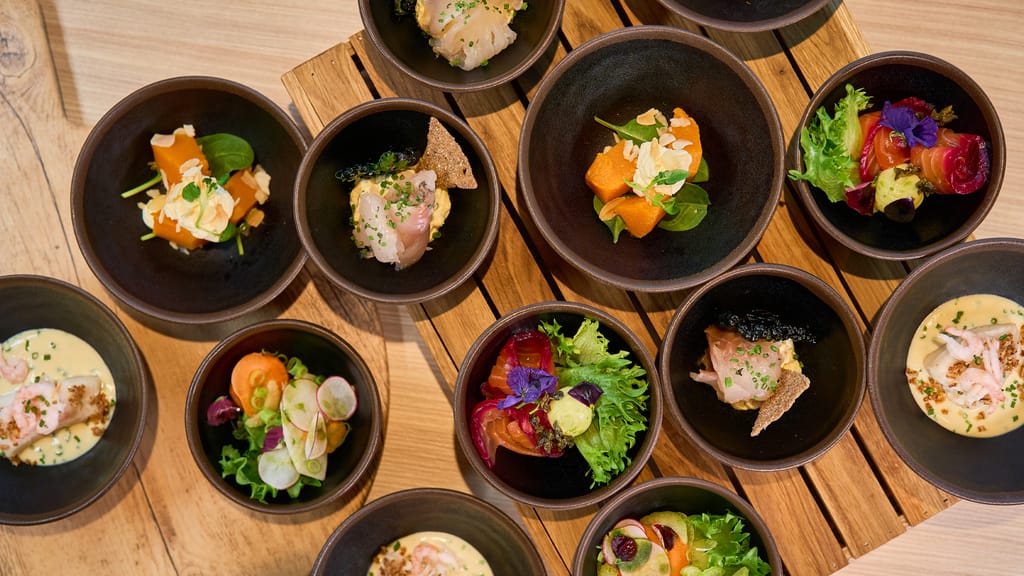
Reducing food waste and working with local suppliers are important aspects of our restaurant operations. Around 70 per cent of the ingredients purchased for our restaurants are sourced locally within the Baltic Sea region, namely from Finland, Sweden and Estonia. According to a survey commissioned by Viking Line in 2025, 58 per cent of Finns consider sustainability efforts in restaurants to be important. At the same time, 64 per cent stated that it is important for meals to be prepared using domestic or Nordic ingredients.*
For us, it is important to offer our passengers meals prepared from high-quality ingredients. Examples include eggs from free-range hens, organically produced tofu from Ekenäs in Finland, and climate-certified chicken. Several commonly used products, such as cream, butter, yoghurt and buttermilk, are sourced from domestic producers.
* The survey commissioned by Viking Line examined Finns’ attitudes towards dining out. It was conducted by Kuu las Helsinki in early summer 2025 and included a total of 2,000 respondents from Finland. The sample, consisting of people aged 18 to 74, is representative of the Finnish population as a whole.
Renewable Biogas from Food Waste
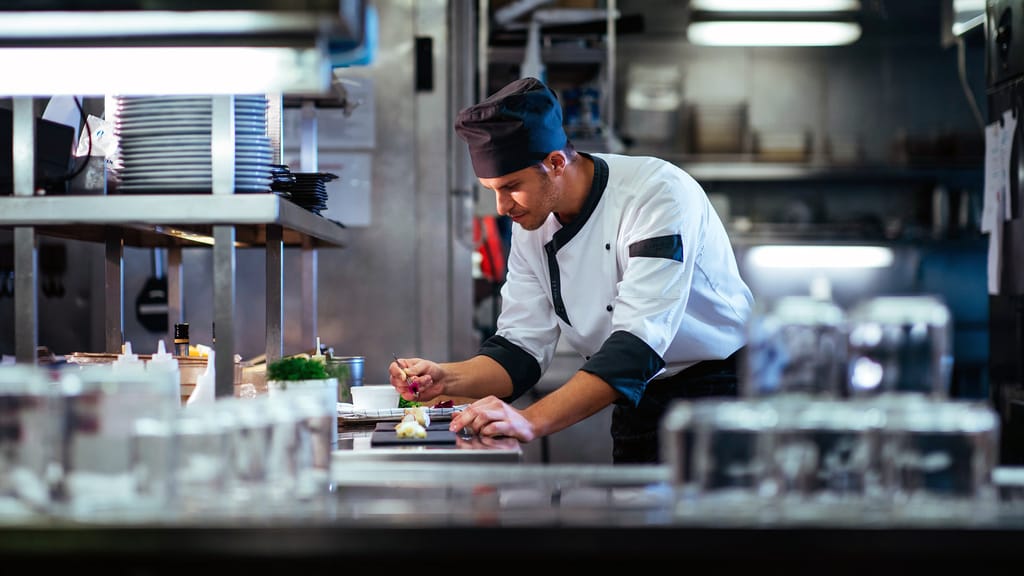
One of the most common challenges in buffet restaurant operations is food waste. In autumn 2024, the restaurants on board Viking Glory and Viking Grace launched a comprehensive initiative to reduce food waste. In 2024, food waste amounted to 151 grams per guest. By the end of 2025, this figure had been reduced to 95 grams per guest, representing a decrease of just over 37 per cent.
To support these efforts, we introduced monitoring technology from the Swedish company Generation Waste, which also encouraged staff to play an active role in reducing waste. On the Turku route vessels, daily food waste is carefully weighed and analysed, although most of the reduction has resulted from changes to kitchen practices. When planning menus, every part of the ingredients is utilised, and ingredients, or parts of ingredients, that might otherwise go to waste are used, for example, to prepare stocks and broths.
Food waste from Viking Glory, Viking Grace and Viking XPRS is collected and transported ashore for biogas production. Viking Line uses certified biogas produced from renewable feedstocks, such as agricultural by-products. In accordance with the EU's sustainability requirements, greenhouse gas emissions over the lifecycle of certified biogas are typically significantly lower than those of fossil marine fuels. The origin and emissions impact of each biogas delivery are verified through the ISCC EU certification scheme.
Sustainable Travel Finland label
Visit Finland has granted Viking Line the right to use the Sustainable Travel Finland label. The label recognizes our long-term commitment to sustainability, a journey that began in the 1980s. It demonstrates that the company has met the programme's sustainability criteria and includes requirements such as certification audited by an independent third party.